
Verity Nature — Tree Planting & Environmental Monitoring Ecosystem
Overview
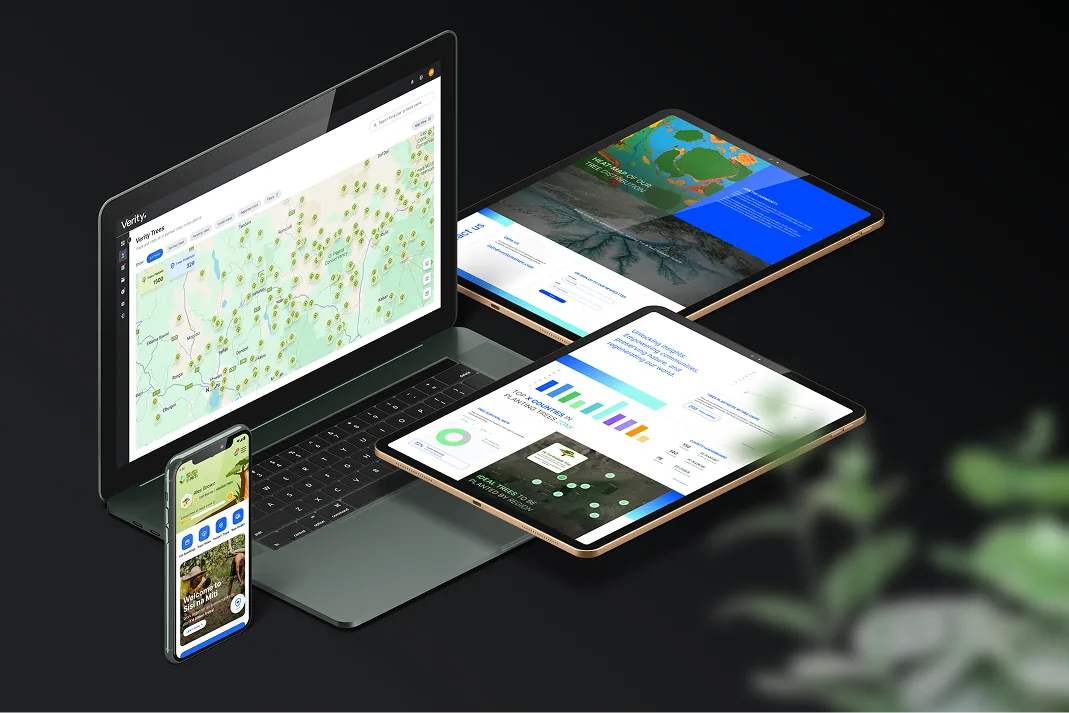
Verity Nature builds tools for large-scale tree planting and environmental monitoring, serving individual planters, field technicians, government partners, and internal operations teams. As one of 2 designers, I worked across a four-surface product suite: a consumer mobile app, an internal admin dashboard, an in-field tablet app, and a public-facing reporting website, alongside an outsourced engineering team of 10–15, in 2-week sprints.
My Role & Process
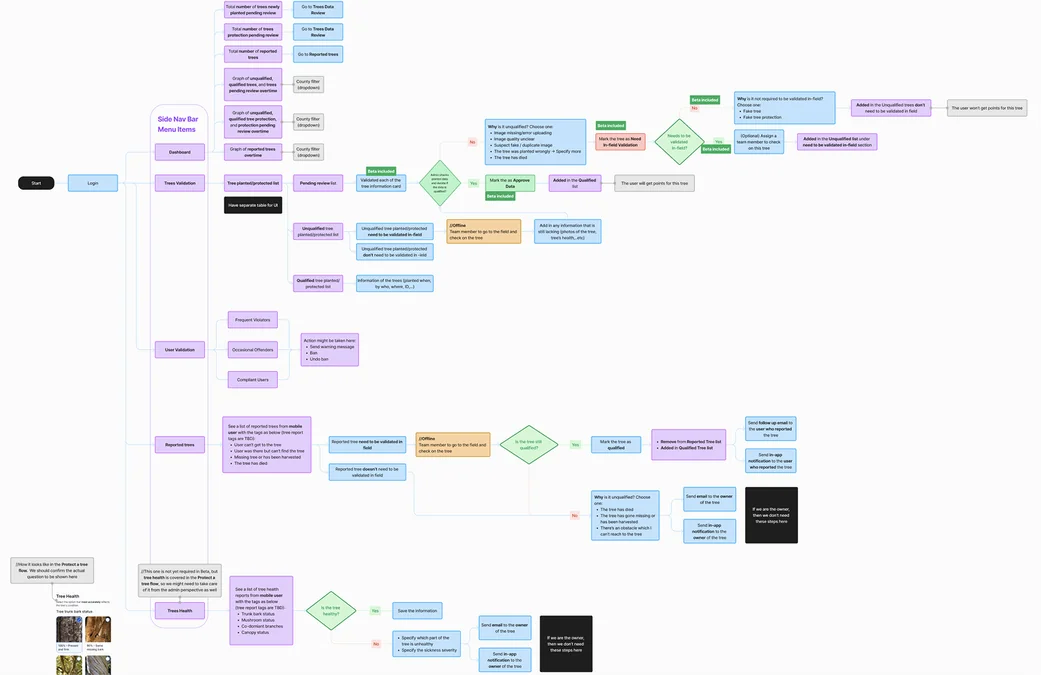
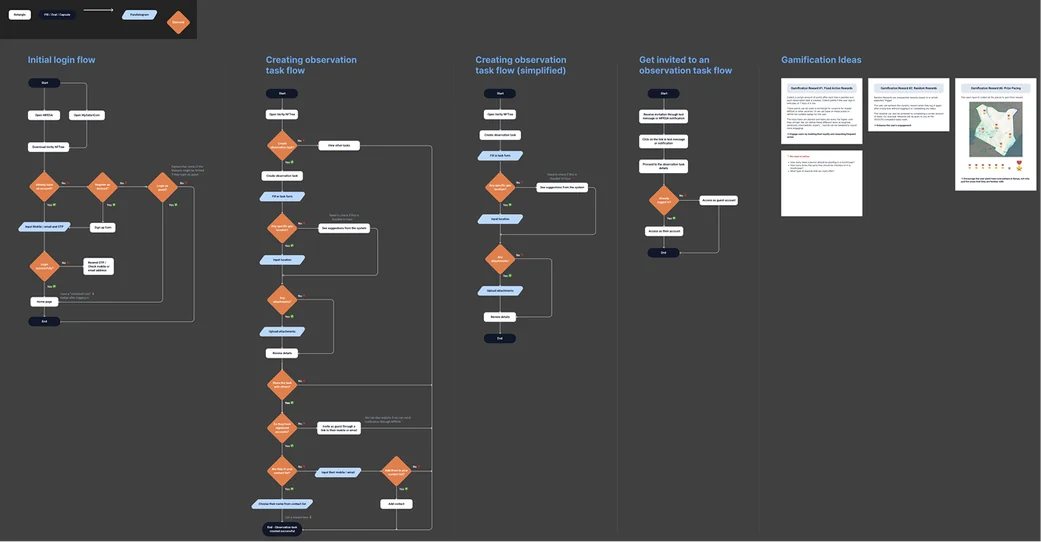
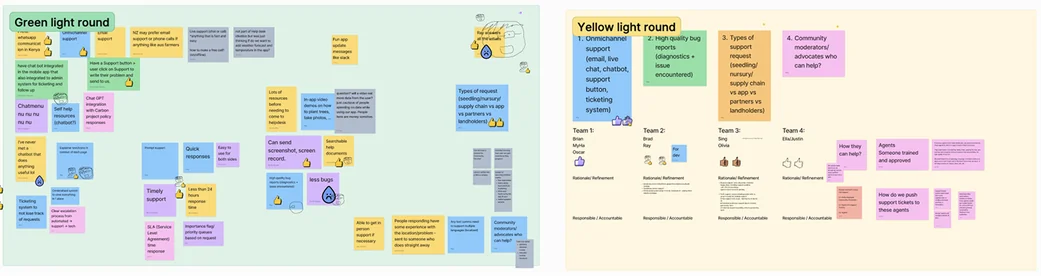
Every screen started with information architecture and user flow. Research spanned a wide range of users, tree planters, landowners, field technicians, scientists, and internal operations staff. Alongside cross-team workshops, I ran direct interviews and usability testing to surface needs and edge cases, then translated those insights into user journeys and flow structures, sketched on paper, and validated in Figma before moving to high-fidelity design.
What I Contributed
Mobile App — Planters & Landowners
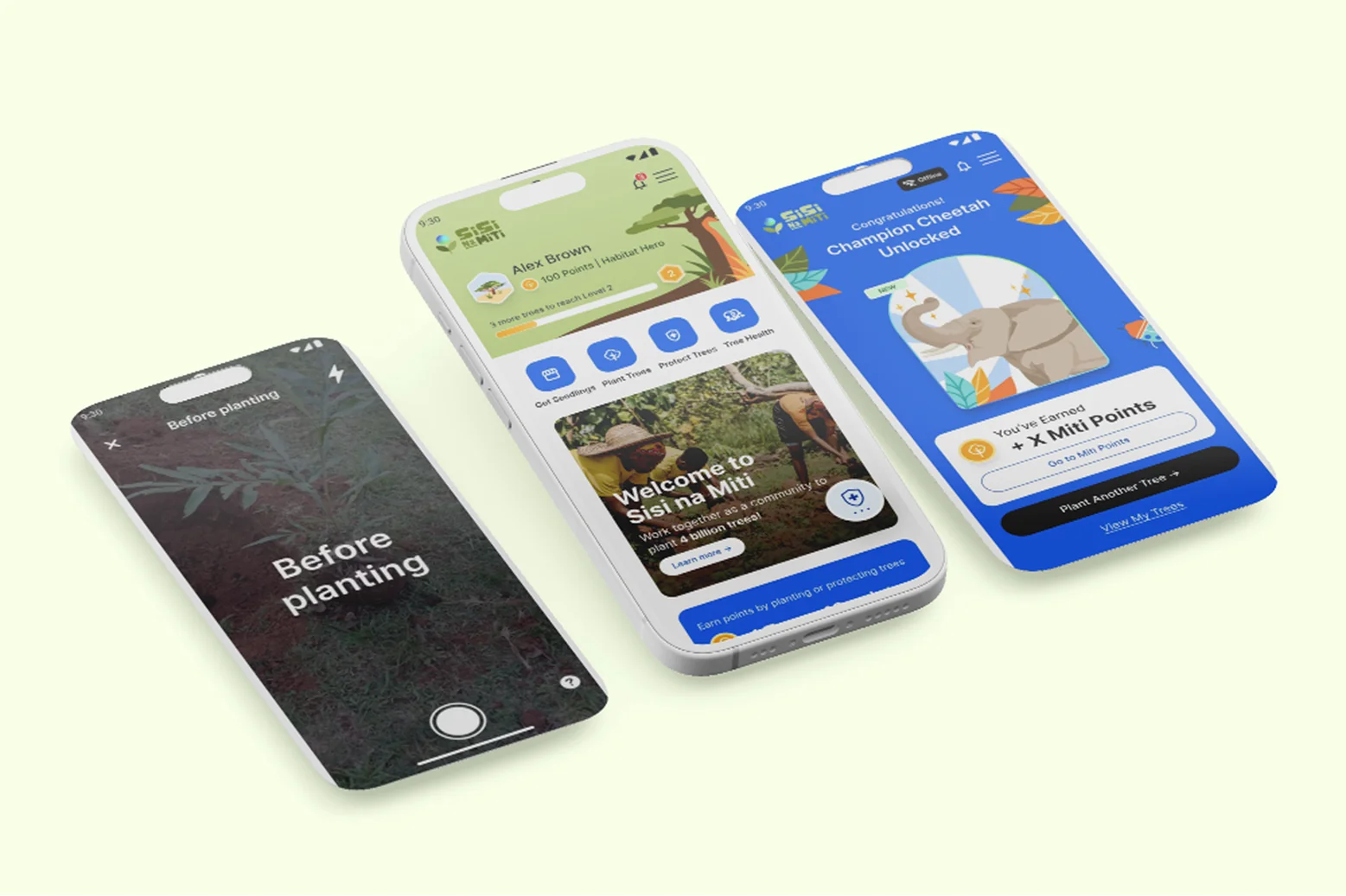
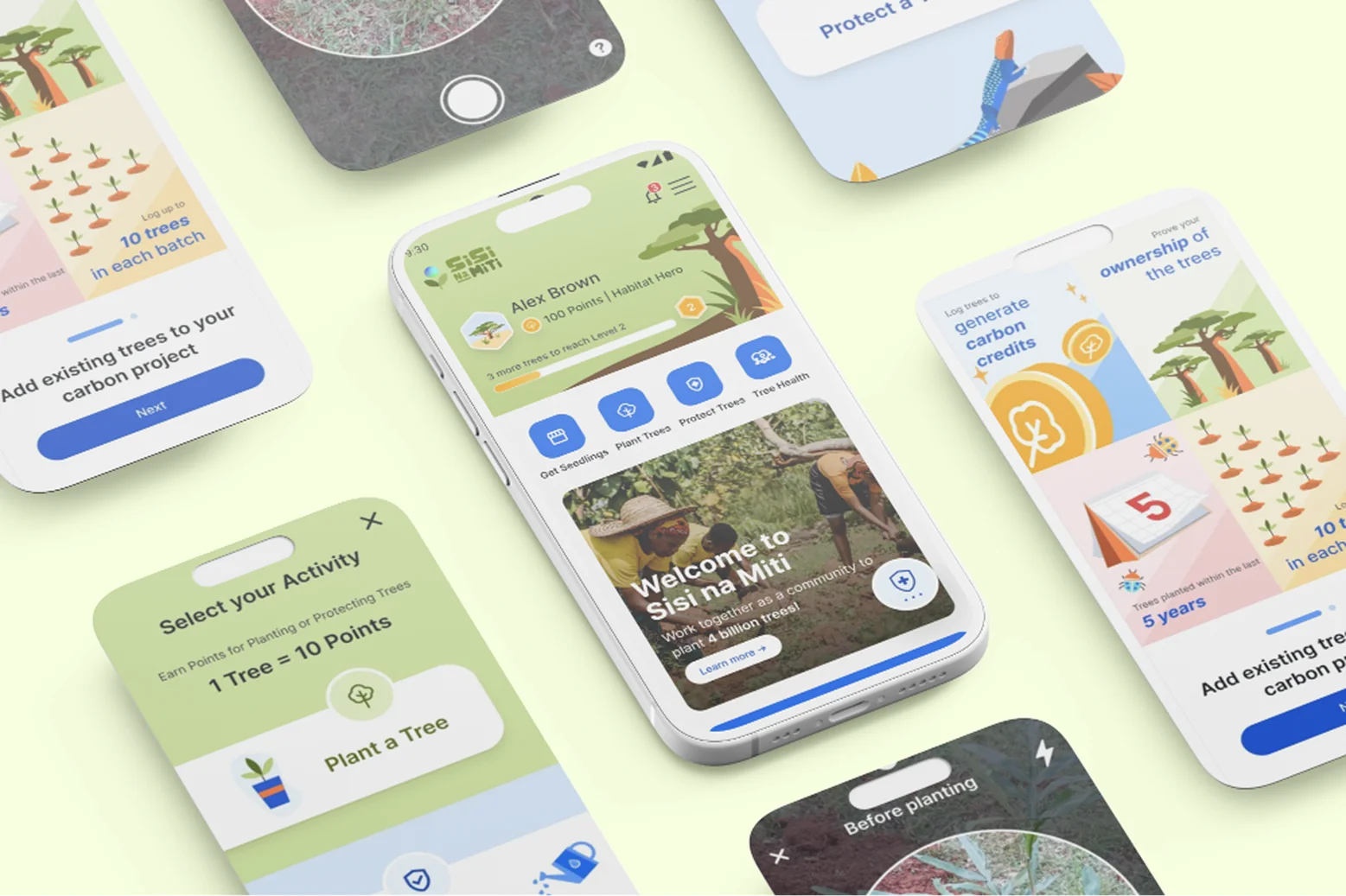
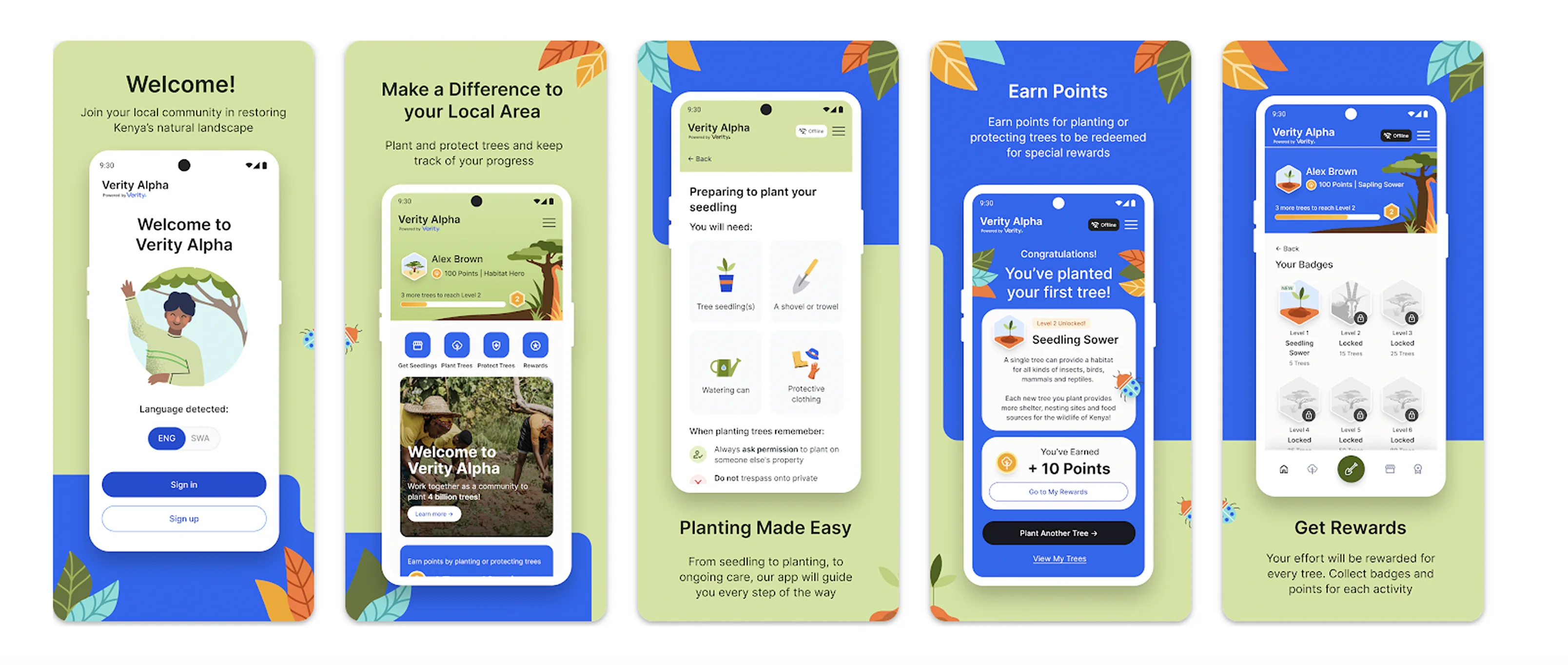
Designed the planting mobile app, letting individual users register trees and track growth and health over time. The app uses a points-based incentive system: users earn points for planting and protecting trees, redeemable directly to their M-PESA mobile money account, tying environmental action to a real, tangible reward.
Admin Dashboard — Internal & Partner Teams
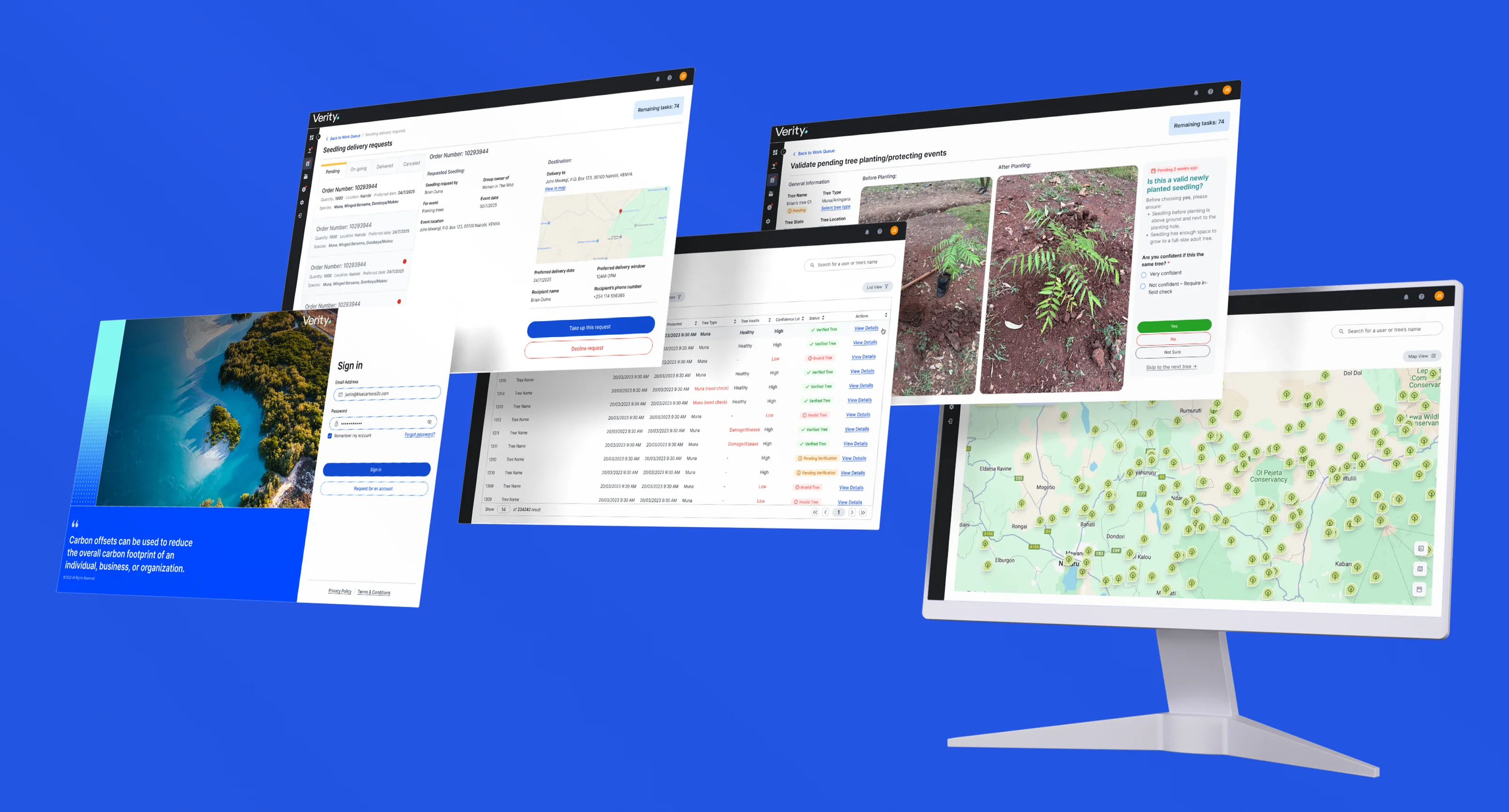
Led the design of the admin dashboard web app, used to monitor and manage the user and tree database. This closed a real visibility gap: before this tool, operational teams lacked a single, reliable view of planting activity, which was slowing decisions across the business.
Public Reporting Website
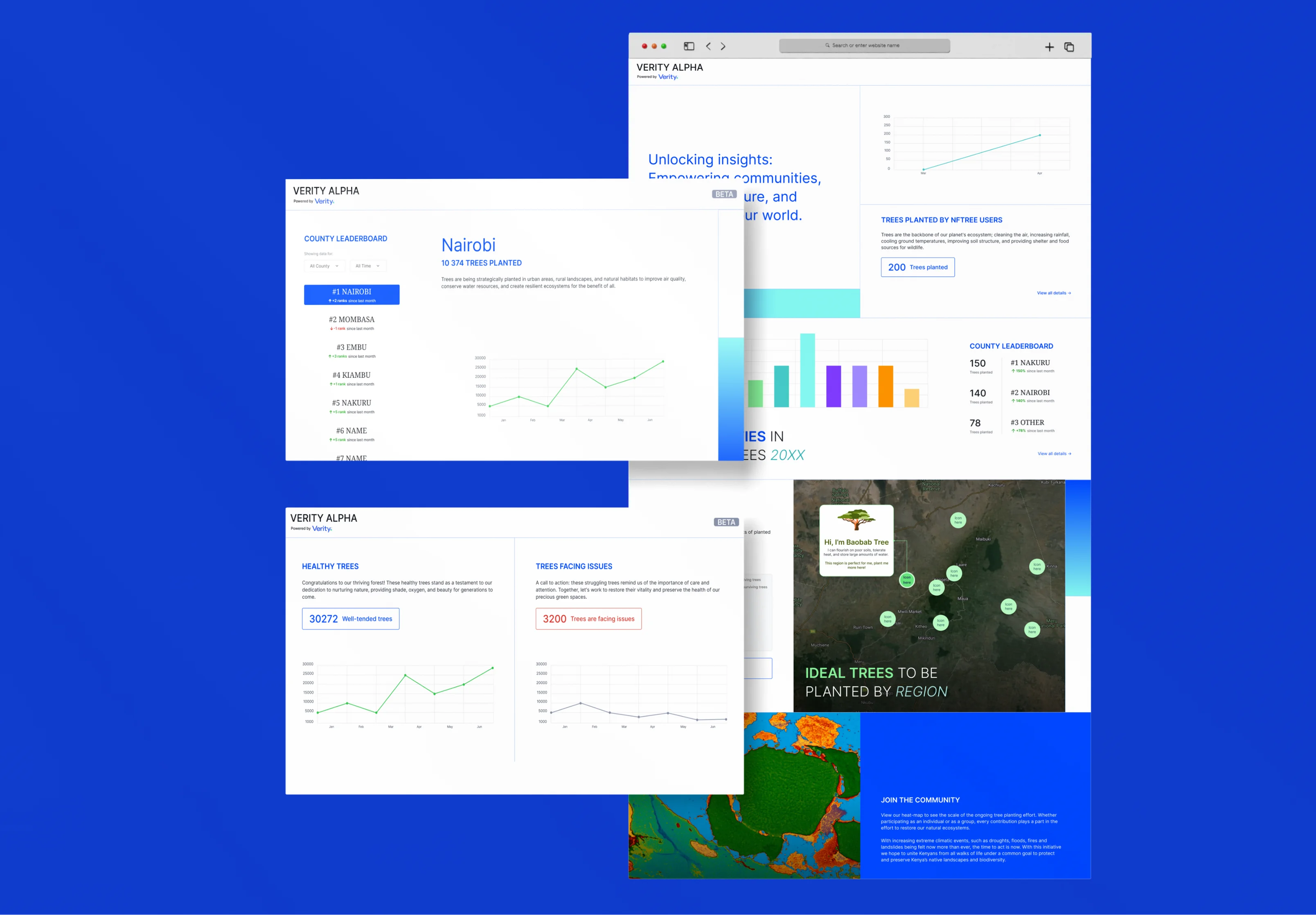
Lead the design of a public website surfacing tree data and a user leaderboard, shareable with local government stakeholders as part of the company's transparency and reporting efforts.
Highlight: Redesigning the Tree-Planting Flow
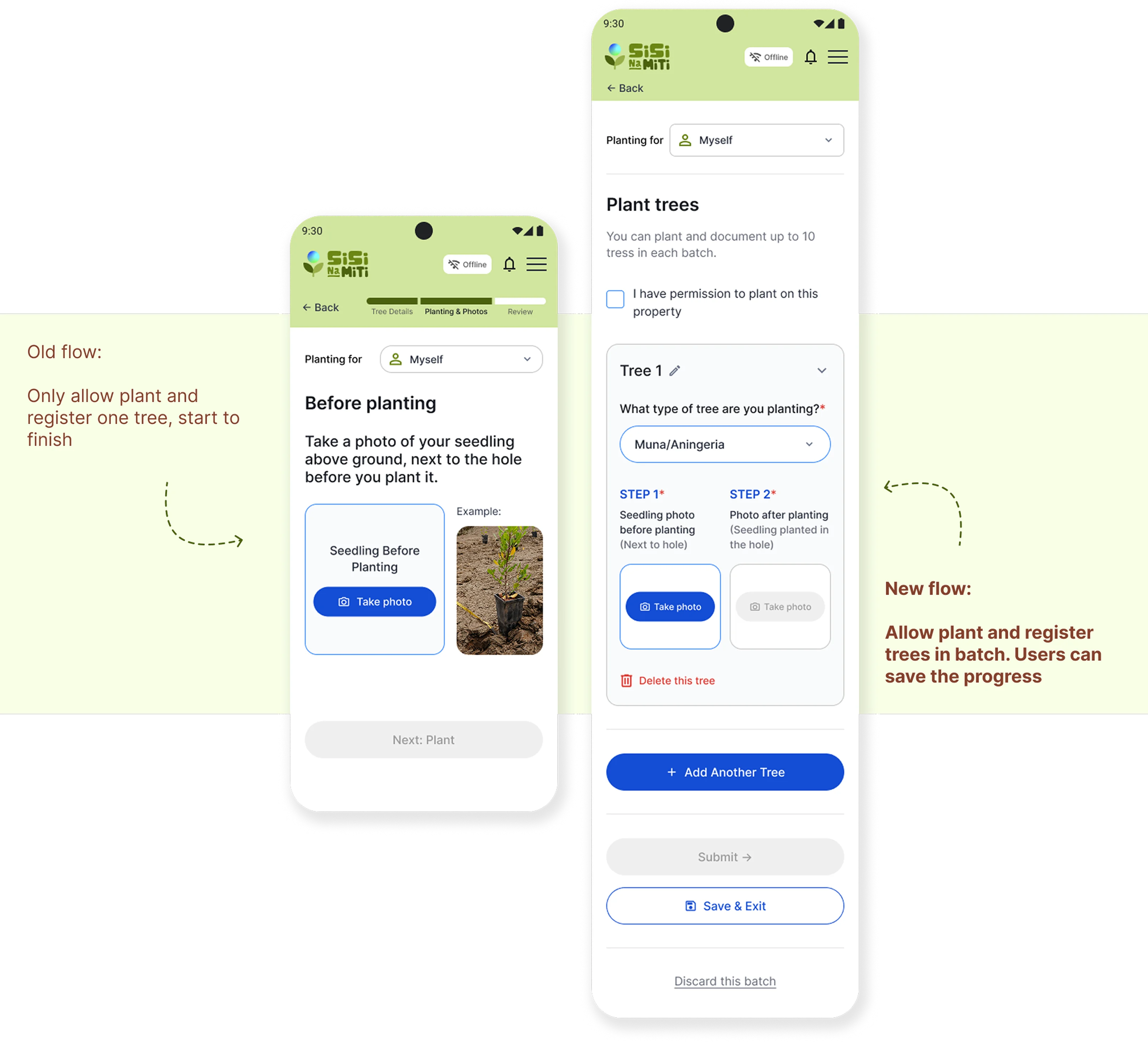
The original flow only allows farmers to plant and register one tree at a time, start to finish, before moving to the next. In practice, that's not how planting works: farmers plant in batches, completing one step across all trees before moving to the next step, not finishing a single tree end-to-end before starting another.
I initiated and redesigned the flow around batch planting: users can register multiple trees together, complete each step across the batch, and save progress to exit and resume later, matching how the work actually happens in the field.
Result: task completion time dropped 50%, and every participant in a usability test group of under 10 local users completed the flow successfully.
Impact
- Every feature and workflow fix shipped in sprint reached 95% adoption across teams and testers.
- The redesigned tree-planting flow cut task completion time by 50% in usability testing.
- Design and product work contributed directly to materials used in the company's funding round.
- Co-led the cross-platform design system, cutting duplicated design effort as the product suite grew to four surfaces.
Reflection
Designing across four surfaces, for four genuinely different user types, on a distributed team spanning Singapore, Australia, New Zealand, and Kenya, sharpened how I think about consistency at scale. It's also where I got comfortable designing for constraints outside a typical screen: rugged field devices, unreliable connectivity, and incentive systems tied to real financial value.
Other Projects


Ready to Craft User-Centric Solutions Together?
Website designed and owned by Myha
Developed by Huy Le & Ho & Quan